
Psoriasis and Atopic Dermatitis
Psoriasis
What Is Psoriasis?
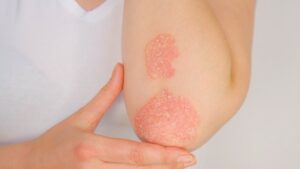
Psoriasis is a relatively common, chronic skin rash affecting as many as 8 million people in the United States, including both adults and children. Patients are typically bothered by itching, burning, or cosmetic symptoms such as raised, thick, inflamed patches of skin covered in silvery-white or grey scaling, which can often appear in visible areas of the body, such as elbows, knees, hands among other areas. Up to 30% of patients with psoriasis can also develop psoriatic arthritis causing swelling and pain in the joints and interfering with daily activities. Overall, psoriasis and psoriatic arthritis can significantly impact your quality of life and emotional well-being. Triggers for psoriasis may include stress, infections, skin injury, certain medications, weather changes, alcohol consumption and smoking. Patients with psoriasis often have metabolic syndrome, which puts them at higher risk for heart disease and stroke.
Treatment Options
There has been a number of new, groundbreaking therapies for psoriasis – topical, oral and injection medications – over the last 10 years. The field of psoriasis treatment is rapidly evolving, giving hope to many of our patients whose symptoms have improved up to 90 to 100%, something which was not possible even a few years ago.
At Atlanta North Dermatology, we are a center of excellence and expertise in treating this condition in the metro Atlanta, Cherokee County, and north Georgia areas. We are especially proud to have one of our providers currently serve as a medical board member of the National Psoriasis Foundation, a leading organization seeking the cure for psoriasis. Our expert dermatology team can provide individualized treatment plans based on the disease type, severity, and patient goals that best fit your needs.
Atopic Dermatitis (Eczema):
Atopic dermatitis (AD) is a relatively common, chronic, immune mediated (immune system mistakenly attacking the body) inflammatory skin disease. It is characterized by itchiness (often the most debilitating symptom) and scaly red patches typically appearing on the face, the crease of the arms and legs and trunk. Patients are at increased risk of secondary infection due to impairment of the skin barrier and scratching, which can worsen atopic dermatitis. This condition commonly begins in childhood but may persist into adulthood or even present later in life. A moderate to severe condition may impose significant quality of life burdens, including sleep disturbance, psychosocial stress, and impaired daily functioning.

Treatment and Management (All Patients)
(1) Skin care:
We recommend gentle skin care with fragrance-free cleansers and daily moisturization to restore and maintain the skin barrier. Sometimes environmental allergens have to be identified and avoided before patients can fully respond to treatments.
(2) Topical Therapies
Steroid creams are typically used for acute flares. Once the flares are under control, then non-steroid topical medications such as tacrolimus, pimecrolimus, crisaborole may be prescribed as maintenance treatment to minimize future flares. There are also some highly efficacious topical medications just as Opzulera (need link) and Ampuzgo (need link) in select patients.
(3) Advanced Systemic Therapies for Moderate to Severe Atopic Dermatitis (biologic therapies)
Biologics are injectable medications that selectively target key immune pathways involved in atopic dermatitis and are designed for long-term disease control. Many of these are considered relatively safe and have significantly improved the quality of life in vast number of our patients.
Dupixent www.dupixent.com
Adbry www.adbry.com
Ebglyss www.ebglyss.lilly.com
Nemluvio www.nemluvio.com
(4) Oral Small Molecule Therapies, such as Rinvoq (www.rinvoq.com), Cibingo (www.cibinqo.pfizerpro.com) and Sotyktu (www.sotyktu.com) offer rapid symptom improvement, especially with itchiness, in as soon as 1-2 days.
(5) Photo therapy: The most common photo therapy is narrowband UVB which is delivered in a controlled clinical setting. It is often considered as an adjunctive therapy or when systemic medications are not appropriate.
At Atlanta North Dermatology, we are experts in treating psoriasis and atopic dermatitis. We will first conduct an initial evaluation, including a review of your condition history, prior treatments, and overall health. We will then determine an initial appropriate therapy based on disease severity and patient needs. Systemic medications often require baseline screening and ongoing laboratory monitoring. Biologics are administered by giving a small injection into the skin. After education and training, many patients choose to self-inject at home.
Patients should experience improvement in itchiness within the first few weeks. Clearance of the skin should continue to improve over the next several months. Results may vary of course by individual. Biologics are generally well tolerated and ongoing follow-up visits will help ensure its effectiveness and address any side effects.
Systemic medications for atopic dermatitis need to be continued to achieve sustained disease control and minimize itchiness and skin inflammation and ultimately improve your overall quality of life. Our patients’ treatment plans are adjusted over time to optimize therapy based on their response and their evolving needs.
Prior authorization is often required for the systemic medications for psoriasis and atopic dermatitis. Atlanta North Dermatology assists all our patients with insurance approval and patient support programs when and if available to ensure that our patients get the medications they need.